ORCHESTRATING THE FUTURE OF Insurance
Introduction
Insurance carriers are in a race to modernize. Customers expect faster claims resolution, personalized policy offers, and seamless digital experiences. Regulators demand greater transparency, auditability, and resilience. Margins remain under constant pressure, and competition from insurtech disruptors continues to reshape the industry landscape.
In this cost sensitive, highly regulated environment, data has become the defining competitive edge, but only if it is governed, orchestrated, and activated effectively. This whitepaper outlines the five most important data-driven investment areas for insurance carriers over the next three years:
- Data Governance, Security & Compliance
- Data Platform Modernization
- AI-Driven Underwriting & Pricing
- Claims Automation & Fraud Reduction
- Personalized Customer Experience
This guide defines what each of the five initiatives requires and shows how Apache Airflow® and Astro make them executable.
Why Airflow and Astro?
- Apache Airflow has grown to become the industry’s most widely used system for orchestrating data workflows, as well as being one of the world’s most active open source projects.
- Astro, Astronomer’s unified orchestration platform, elevates Airflow into an enterprise-grade control plane purpose-built for high-scale AI and data-driven environments.
INITIATIVE ONE Data Governance, Security & Compliance Frameworks
Start with Control: Why Governance, Security & Compliance Come First
Every insurance carrier runs on proprietary data and models: actuarial algorithms, underwriting rules, fraud signals, reserving methodologies. These are the crown jewels. But without disciplined governance, security, and compliance, the very assets that should drive differentiation can quickly become liabilities.
Governance failures ripple across the business. If a claims fraud model is fed incomplete data, false negatives slip through and costs climb. If pricing pipelines can’t prove lineage, regulators delay approvals or issue fines. If customer data isn’t secured and consent is unclear, retention models fail and trust erodes.
Governance Built In, Not Bolted On
Carriers can’t treat governance as a bolt-on. It is the foundation. Reliable pipelines, enforceable access controls, and reproducible reporting are now table stakes. Regulators are raising the bar with IFRS-17 along with global regulatory trajectory for AI (i.e., NAIC AI guidance). The mandate is clear: build governance, security, and compliance into the core of the data stack, or risk stalled transformation and growing exposure.
To make governance real, teams need capabilities that are enforced by the platform, not just by policy. Astro delivers control, visibility, and security at every stage of the data workflow.
| Required Capability | How Astro Supports It |
| Policy-as-Code for Data and Model Governance | Pipelines are defined in code and deployed via CI/CD. Validation, masking, audit logging, and access controls can be embedded as enforced steps. Governance becomes codified and reproducible across pricing, underwriting, and claims pipelines. |
| Hardened Runtime for Regulated Workloads | Astro Runtime delivers a production-hardened Airflow distribution protected with timely security patches and controlled image updates. |
| Enterprise Access Control & Isolation | Astro enforces RBAC, integrates with SSO/IAM, and supports isolated worker environments. Access to proprietary IP such as rating algorithms or reserving methodologies is tightly scoped and fully auditable. |
| Comprehensive Data Lineage & Auditability | Every task execution and data movement is logged. Carriers can trace inputs and outputs across rate filings, IFRS-17/LDTI reports, and AI underwriting models. This supports audit readiness and impact analysis for regulatory reviews. |
| Automated Compliance & SLA Monitoring | Centralized metadata and dashboards highlight failures, SLA breaches, or anomalies in regulated processes. Pipelines for pricing, claims, and reserving are continuously monitored for compliance. |
| Orchestration-Aware Data Quality Monitoring | Astro Observe links quality checks such as schema, volume, and completeness directly to pipeline runs. Teams can trace issues to specific tasks, speeding root cause analysis for pricing or claims data anomalies. |
| Production-Grade Reliability from Day One | Autoscaling, cross-region DR, and zero-downtime updates deliver a 99.9% uptime SLA replacing the significant operational overhead of self-managing Airflow clusters. |
| Commercial Support & SLAs | Astronomer’s Airflow experts provide 24x7 support with guaranteed SLAs. Mission-critical processes like rate filings, claims payments, and reserving runs stay reliable. |
Remote Execution: Enabling Secure, Cloud-Native Data Orchestration
For insurance carriers, managed cloud platforms can create unacceptable risk. Core workflows rely on highly sensitive assets: customer PII, medical records, claims histories, actuarial models, underwriting rules, fraud detection signals, and regulatory reporting datasets. Moving that data into a vendor’s infrastructure often violates internal security policy, regulatory obligations, or both.
Astro solves this with Remote Execution, a deployment architecture introduced in Airflow 3 that separates orchestration from execution. Carriers get a fully managed Airflow control plane without sending sensitive data outside their environment. Workflows run exactly where compliance policies dictate: inside private clouds, on-premises data centers, or managed public cloud accounts under the carrier’s control.
Your pipelines are orchestrated centrally but executed locally. That means:
- Policyholder data (e.g., PII, claims files, health records) stays within your compliance boundary.
- Proprietary IP (actuarial models, underwriting algorithms, fraud signals) is never exposed outside your VPC.
- Regulatory datasets (IFRS-17, LDTI, Solvency II) remain governed in the systems where they belong.\
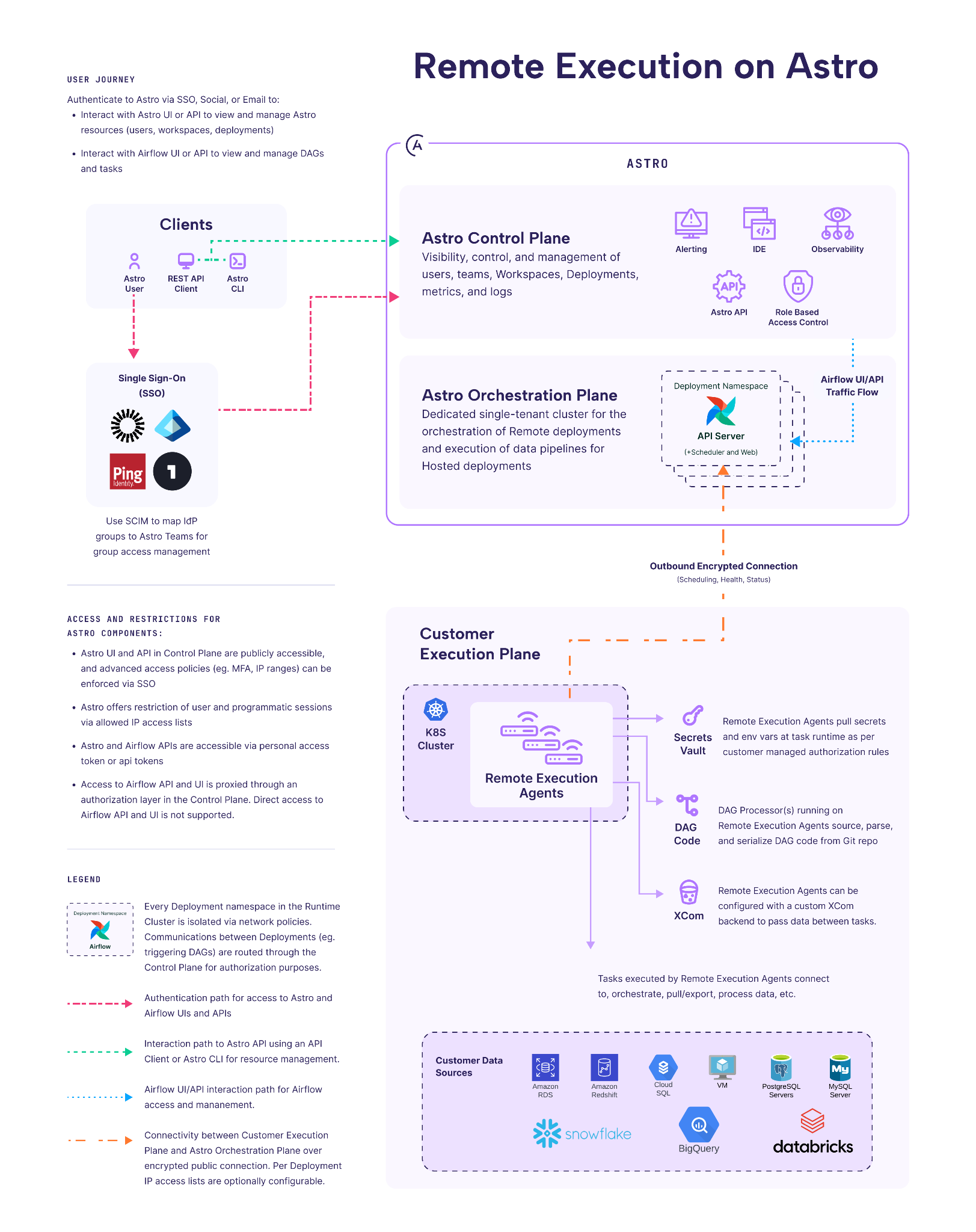
Figure 1: Stepping through Remote Execution’s architecture and traffic flow
Remote Execution uses a three-plane architecture:
- Our control plane manages users and metadata but never sees your data.
- Our orchestration plane schedules workflows in a single-tenant environment.
- Your execution plane (fully yours) runs the tasks using your infra, secrets, and permissions.
All communication between the execution plane and Astro’s control plane uses outbound-only, encrypted connections. These connections transmit a strictly limited data set: task run status and operational metadata such as task duration. Optionally, you can enable OpenLineage metadata export for integration with Astro Observe. In the other direction, the control plane sends only the instructions required to queue the next task. By restricting traffic, Astro ensures that neither proprietary data nor code ever leaves the customer’s execution environment.
There is no need for inbound firewall exceptions. Astro’s exclusive remote execution agents authenticate with your IAM and run jobs under customer-managed identities. This aligns with zero-trust principles and removes the need to trade security for operational efficiency.
Bottom line: Astro gives you the benefits of a managed orchestration platform, including agility, performance, reliability, and reduced ops burden, without ceding control over sensitive data or compute. That’s what makes it deployable in regulated environments where conventional SaaS models fail.
You can learn more by downloading our whitepaper: Remote Execution: Powering Hybrid Orchestration Without Compromise.
Astro Remote Execution in Action
A global insurance leader with 50+ years of underwriting expertise, operating in 115+ countries and offering property, casualty, specialty, and reinsurance solutions, adopted Astro with Remote Execution to manage its most sensitive workloads. Previously reliant on a legacy scheduler and open-source Airflow, the company needed a secure way to automate AI/ML workloads with confidence, running them alongside existing ETL pipelines into Databricks.
With support from Astronomer’s Center of Excellence, the data team cut over the entire production orchestration platform to Astro in a single quarter. The company now runs a fully managed, enterprise-grade architecture on Azure, scaling its most demanding AI and ETL workloads. Robust disaster recovery with cross-region resilience ensures business continuity, even during full data center outages.
Astro Private Cloud
For organizations that cannot adopt any managed services, Astro Private Cloud delivers enterprise-grade Airflow-as-a-Service entirely within your own environment. It runs exclusively on customer-managed infrastructure—across private cloud, on-premises, or fully air-gapped deployments—providing complete ownership over data, network boundaries, and security controls.
Astro Private Cloud consolidates fragmented Airflow usage into a centrally governed platform with isolated, multi-tenant deployments. A unified control plane enables teams to standardize orchestration, enforce security and governance policies, and manage multiple Airflow environments while individual teams operate independently within dedicated namespaces.
By combining centralized governance with full infrastructure control, Astro Private Cloud reduces operational overhead, strengthens security and compliance, and enables organizations to reliably scale orchestration across the enterprise.
Note: Astro Private Cloud does not include features specific to the hosted Astro service, such as the Astro IDE and Astro Observe.
INITIATIVE TWO Modernize the Core
Insurance still runs on decades-old systems: legacy policy admin, siloed warehouses, point-to-point integrations. They keep the lights on but slow everything else down. Pricing cycles drag because actuaries can’t access clean, timely data. Finance closes late because reconciliations are manual. AI pilots stall because the underlying data isn’t reliable or accessible at scale.
Modernization isn’t about swapping one database for another or “lifting and shifting” on-premise systems to the cloud. It’s about creating a real-time, hybrid platform where streaming telematics, batch actuarial data, and AI workloads all run with the same robust governance and cost controls. Without that, every downstream initiative dependent on that data remains fragile and untrustworthy.
However, modernization efforts stall when teams start by replacing systems rather than connecting them. Orchestration should come first. This is because it unifies today’s fragmented tools and provides a stable foundation where carriers can swap in best-fit solutions over time without disrupting the whole stack.
Modernization Without the Mess
To modernize successfully, carriers need orchestration that bridges legacy systems, accelerates migration, and scales with demand. Here’s how Astro maps to those requirements.
| Required Capability | How Astro Helps |
| Hybrid-Cloud Flexibility | Astro’s Remote Execution separates orchestration from execution, allowing sensitive workloads to run securely inside your environment. It supports hybrid and multi-cloud deployments without exposing data, enabling zero-trust, policy-aligned orchestration across environments. |
| Data Migration & Integration from Legacy Systems | Astro connects to legacy policy admin systems, mainframe data stores, and modern cloud platforms. It orchestrates phased migrations with synchronized ETL workflows, enabling carriers to modernize step by step without big-bang risk to pricing, claims, or finance. |
| Plan Airflow upgrades with confidence | Otto, the data engineering agent for Astro, turns a multi-sprint project into a repeatable, agent-assisted process. It analyzes your entire Dag fleet against Astronomer’s knowledge base, identifying what breaks, proposing specific code changes, and producing a prioritized plan. |
| Microservices and API Enablement | Astro orchestrates APIs for claims intake, telematics streams, underwriting services, and fraud detection. It supports event-driven orchestration critical to modern insurance applications such as straight-through claims or usage-based pricing. |
| Scalability & Resilience | Astro autoscaling ensures consistent performance during spikes, whether it’s CAT event claims surges or regulatory reporting deadlines, on an architecture that is geo-replicated and fault-tolerant with DR. |
| Security & Compliance by Design | Astro provides RBAC, audit logs, and lineage tracking across all pipelines. This supports compliance with GDPR, HIPAA (for health lines), IFRS-17, and Solvency II, while giving regulators confidence that data pipelines are secure and controlled. |
Astro in Action
Data teams in insurance firms adopt Astro to eliminate the legacy schedulers that often cripple the ability to ship new data products and workflows. Moving from legacy orchestration systems such as AutoSys, Control-M, Informatica, Tidal, or Apache Oozie to Astro unlocks strategic and operational gains:
- Cut costs by up to 75%. Organizations moving to Astro typically realize major savings through reduced infrastructure, licensing, and operational overhead, freeing budget for innovation.
- Unblock agility and scale with cloud-native orchestration. As a modern orchestration platform, Astro gives teams the flexibility, resilience, and scalability needed to support fast-moving data and AI initiatives without the constraints of legacy tooling and manual overhead.
- Attract and retain top engineering talent. Code-first and open source, by using Airflow data teams recruit top talent more easily and onboard faster, while avoiding lock-in to niche or proprietary tech.
Commonly migrated workloads include ETL jobs, data warehouse loads and refreshes, report generation and distribution, batch file transfers (FTP/SFTP jobs), data validations and quality checks, time- or event-triggered job dependencies across systems, and mainframe and SAP job coordination.
No matter what workload or legacy orchestration tool your organization is using, Astronomer’s Professional Services team can help. The company’s experts can build an operational framework to smoothly and safely migrate your workloads to Astro.
Astro in Action
One of the largest U.S. insurers faced a fragmented orchestration stack following M&A-driven growth, with rigid legacy tools lacking native observability, dependency management, and governance. This slowed team onboarding, limited transparency, and blocked progress toward a modern, AI-ready data architecture.
Standardizing on Astro with Astronomer's Center of Excellence and legacy migration tooling delivered enterprise-grade security and compliance, secure orchestration across Snowflake, dbt Core, and Iceberg, and a Remote Execution model that accelerated onboarding across the enterprise. The result was a pipeline processing time reduction of up to 99.5%.
INITIATIVE THREE AI-Driven Underwriting & Pricing
Underwriting is the beating heart of insurance, and AI is reshaping how it works:
- Submissions can be ingested and triaged automatically using agentic AI with OCR and NLP.
- Broker documents can be prefilled and enriched with third-party data.
- Risks can be scored by ML models in minutes, with price indications, elasticity tests, and portfolio scenarios generated on demand.
- Generative AI can draft coverage language or assess appetite fit, while feedback loops from bound policies feed back into actuarial models and portfolio steering.
Done right, AI raises throughput, sharpens risk selection, and gives underwriters more time to focus on judgment, not paperwork.
But the risks are just as clear. Unstructured intake, scattered features, and opaque models introduce errors instead of efficiencies. Regulators now classify underwriting and pricing AI as “high risk,” requiring explainability and control. Carriers that deploy without governance invite compliance findings and reputational damage. Those that hold back risk stagnation.
From Submission to Decision: The Pipeline Layer That Makes AI Work in Underwriting
Scaling AI in underwriting requires more than a model. It requires orchestration. Data must flow reliably, features must be tested and versioned, and models must be monitored and rolled out in stages. With structure, AI becomes an accelerator. Without it, it becomes a liability..
| Required Capability | How Astro Supports It |
| Unified, Scalable Data Pipelines | Astro orchestrates end-to-end AI workflows for underwriting and pricing spanning intake, feature engineering, scoring, and retraining. It ingests from legacy policy systems, broker submissions, and third-party data sources, scaling across cloud or on-prem compute, including GPU-backed infrastructure. |
| Model Lifecycle Automation & Observability | Astro schedules and monitors retraining, inference, and validation jobs for underwriting and fraud models. Built-in retries, logging, and alerts let teams track pipeline health and model performance in production with full lineage. |
| Secure, Compliant AI Execution | With Remote Execution, data and models stay within carrier-controlled environments. Role-based access, workload isolation, and audit trails support compliance with AI regulatory guidelines, and internal model governance standards. Enforcing data sovereignty ensures adherence to privacy regulations such as the EU GDPR. |
| Real-Time and Parallel AI Workloads | Event-driven orchestration enables AI models to respond instantly to new submissions, claims, or telematics events. Parallel execution scales portfolio scoring, fraud detection, or coverage drafting at speed. |
| Multi-Step Agentic Workflow Orchestration | The Airflow Common AI Provider orchestrates multi-step agentic workflows such as triaging broker documents, pre-filling applications, or summarizing claim notes. Pipelines handle branching logic, tool calls, and error recovery with production-grade reliability. |
| Flexibility to Evolve with the AI Landscape | Built on Apache Airflow, Astro is open and technology-agnostic, supporting custom code, new libraries, and emerging connectors. Carriers can swap AI tools or add new workflows without re-building infrastructure, accelerating experimentation and adoption. |
Astro in Action
Airflow is already used by some of the most demanding AI companies and agentic workloads on the planet:
- OpenAI has standardized on Airflow across its business with over 7,000 pipelines spanning research, operations, and finance, all while providing a foundation for 10x growth. Read more.
- GitHub relies on Airflow to process billions of developer events per day, orchestrating the feedback loops used to continuously improve Copilot. Read more.
The insurance industry is following suit.
A top 5 global financial institution offering insurance**,** banking services**,** and wealth management has more than 100 data and ML teams using Astronomer to orchestrate AI and data workflows. With over 60 Airflow deployments running on a unified platform, the institution has standardized execution for use cases like real-time fraud detection, LLM-powered chatbots for call centers, and AI-driven forecasting for market research. Astro supports fast, reliable orchestration across ETL, MLOps, and agentic AI, with certified Airflow engineers across the organization driving faster deployment and consistent governance across all lines of business.
INITIATIVE FOUR Claims Automation & Fraud Reduction
Claims are where the promise of insurance meets reality. Customers expect speed; carriers demand efficiency. Every extra day in the cycle adds cost and erodes trust. Fraud, which drains billions from the industry each year, makes accuracy just as critical as speed.
Straight-through processing for low-complexity claims is now expected. First Notice of Loss (FNOL) events should automatically trigger routing, triage, and settlement. Document AI can parse medical bills, invoices, and photographic evidence at scale, while automated liability assessment and fraud scoring reduce loss-adjustment expense without sacrificing control. Reserving models fed with early indicators of claim complexity improve accuracy, and subrogation opportunities can be scored and routed before they slip away.
From FNOL to Settlement: Orchestration at the Core of Claims Automation
Straight-through processing and fraud detection need orchestration that ties together intake, enrichment, scoring, and settlement. The table below maps the required capabilities for automating claims and how Astro supports them.
| Required Capability | How Astro Supports It |
| Event-Driven Claims Orchestration | Astro triggers workflows directly from FNOL events, claim system updates, or external data feeds (e.g., telematics, weather). Pipelines enforce SLAs across triage, assessment, and settlement steps. |
| Agentic Document & Image Processing at Scale | Orchestrates agentic OCR, NLP, and computer vision tasks for invoices, medical bills, and damage photos. Parallelization and retries reduce rework and backlog during CAT event surges. |
| Fraud Signal Integration & Routing | Astro pipelines enrich claims with fraud signals, such as geospatial, network, behavioral, and route suspicious cases to SIU queues without delaying clean claims. |
| Reserving & Subrogation Analytics | Pipelines feed reserving models with complexity indicators and identify subrogation opportunities, ensuring early warning and recovery steps are embedded in claims flow. |
| Compliance, Audit & SLA Monitoring | Astro Observe links data quality checks, lineage, and SLA tracking to claims automation. Teams can trace anomalies or delays to specific tasks, ensuring audit readiness and regulatory compliance. |
Astro in Action
McKenzie Intelligence Services (MIS) provides catastrophe intelligence for use in claims processing. It analyzes satellite, aerial, and ground imagery, combining expert validation with machine learning models to deliver rapid, accurate assessments. Before Astro, MIS relied on manual, ad-hoc pipelines that limited efficiency and operational tempo. By adopting Astro, the team migrated to fully automated, 24/7 workflows that tripled efficiency and dramatically improved reliability. Machine learning models for damage detection are now orchestrated seamlessly alongside data ingestion and enrichment. Infrastructure issues that once stalled production for extended periods are resolved in under an hour, giving MIS a resilient platform for high-stakes intelligence delivery. You can learn more in the MIS case study.
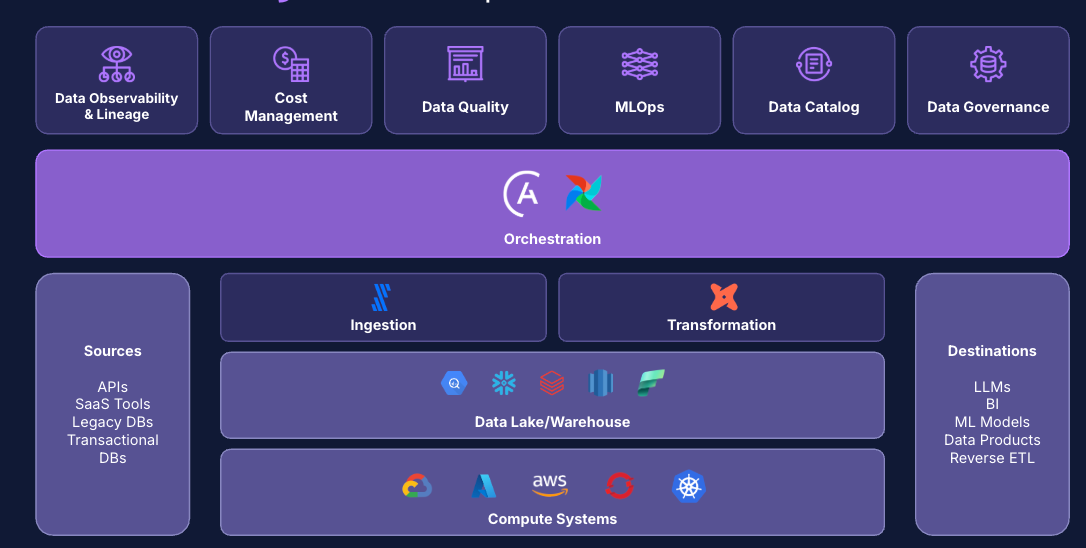
Figure 2: With the Astro platform, data teams work with a unified DataOps stack to build, run, and observe all of their critical data pipelines and workflows.
INITIATIVE FIVE Personalized Customer Experience
Insurance customers don’t compare carriers only to each other. They compare them to Amazon, Apple, and their bank. They expect personalized offers, proactive alerts, and seamless digital journeys. Meeting those expectations requires real-time, data-driven engagement. Key demands include
- Usage-based and behavior-based pricing depends on telematics and IoT data integrated with governed pipelines.
- Churn prevention requires retention models that trigger targeted save offers at the right moment.
- Proactive CAT and weather alerts need reliable event streams that can guide customers before losses occur.
- Embedded and parametric products must be delivered consistently across digital channels.
- Even routine touchpoints such as billing, endorsements, claims communications require orchestrated journey data to feel seamless rather than fragmented.
The challenge is integrating these data flows across silos while honoring privacy and consent. Without orchestration, personalization stays a marketing buzzword, campaigns are batch-driven, inconsistent, and tone-deaf. Carriers that master personalization see deeper engagement and higher premiums per account. In a commoditized market, the experience is the differentiator, and it’s data pipelines that make it real.
Powering Personalization with Trusted Data Pipelines
Delivering seamless, personalized experiences across channels requires more than customer data. It demands a modern orchestration layer that connects, activates, and governs that data at scale.
| Required Capability | How Astro Helps |
| Unified Policyholder Data Platform | Astro automates ingestion from policy admin systems, telematics feeds, claims data, and engagement channels. Profiles stay fresh and consistent, replacing ad hoc scripts with reliable, governed workflows. |
| Real-Time Personalization Engine | Astro uses event-based scheduling to respond instantly to customer actions such as a claim submission, policy change, or telematics event, triggering retention models, usage-based pricing, or CAT alerts in near real time. |
| API and Ecosystem Integration | Astro calls and responds to APIs across claims platforms, IoT devices, weather data providers, and distribution partners, enabling embedded and parametric product delivery across digital channels. |
| Security & Privacy Controls | Astro enforces RBAC, audit logs, and execution isolation. With Astro Observe, teams trace how policyholder data is used and demonstrate compliance with GDPR, HIPAA, or consent management rules. |
| Multichannel Delivery & Experience Support | Astro orchestrates workflows that feed apps, portals, SMS/email alerts, and agent tools, ensuring low-latency, high-reliability delivery of personalized offers and communications. |
Astro in Action
AAA Life Insurance, serving over 1.6 million policyholders, improved its customer insights and analytics pipelines with Astro after outgrowing GitHub Actions. Astro enabled end-to-end orchestration of dbt workflows with Cosmos, reducing troubleshooting time by 80% and ramping up to over 99% reliability in daily data freshness SLAs. The team completed the migration to production in under 90 days. Cosmos added model-level visibility into dbt jobs, allowing targeted retries instead of full reruns. Building on this foundation, AAA Life is now exploring AI-driven use cases such as internal LLM workflows to summarize policyholder support conversations, all powered by Astro’s orchestration layer.You can learn more about AAA Life Insurance from the case study.
One of North America’s leading private mortgage insurance providers needed a scalable foundation to power customer analytics but ran into limits with managed Airflow on Amazon MWAA. Pipeline reliability depended on non-core team members, slowing progress, while dbt performance issues added cost and latency.With Astro, the team gained autoscaling orchestration, enterprise-grade visibility, and support. Running dbt jobs on Cosmos improved performance and lowered costs. The impact: 5× pipeline growth, over $100k in TCO savings, and a leaner stack by retiring two separate tools, all enabling faster, more reliable data flows to support personalized experiences at scale.
Conclusion and Next Steps
Modernizing the data stack is no longer optional for insurance carriers. It is a prerequisite for compliance, efficiency, and AI-driven transformation. From cutting legacy costs and reducing downtime, to enabling straight-through claims processing and personalized customer experiences, each initiative in this guide shares the same foundational requirements:
- Clean, timely, governed data
- Reliable, observable pipelines across hybrid, multi-cloud, and on-premise environments
- Scalability and cost efficiency that adapts to evolving compliance, operational, and market demands
That is the role of orchestration. The insurance carriers that win the next decade will treat orchestration as the control plane for AI, compliance, and customer experience. They will operationalize it with platforms like Astro.
Build a trusted, future-ready data stack today.
Run an Astro TCO analysis and get in touch with our experts today to get results faster.
Get the Full Guide
Keep reading to explore how data orchestration is at the center of the top five data-driven investment areas in the insurance industry.
By proceeding you agree to our Privacy Policy, our Website Terms and to receive emails from Astronomer.

Get started free.
OR
By proceeding you agree to our Privacy Policy, our Website Terms and to receive emails from Astronomer.